

Blog
Why Balance Bikes Help Children Learn to Ride Faster Than Traditional Bikes

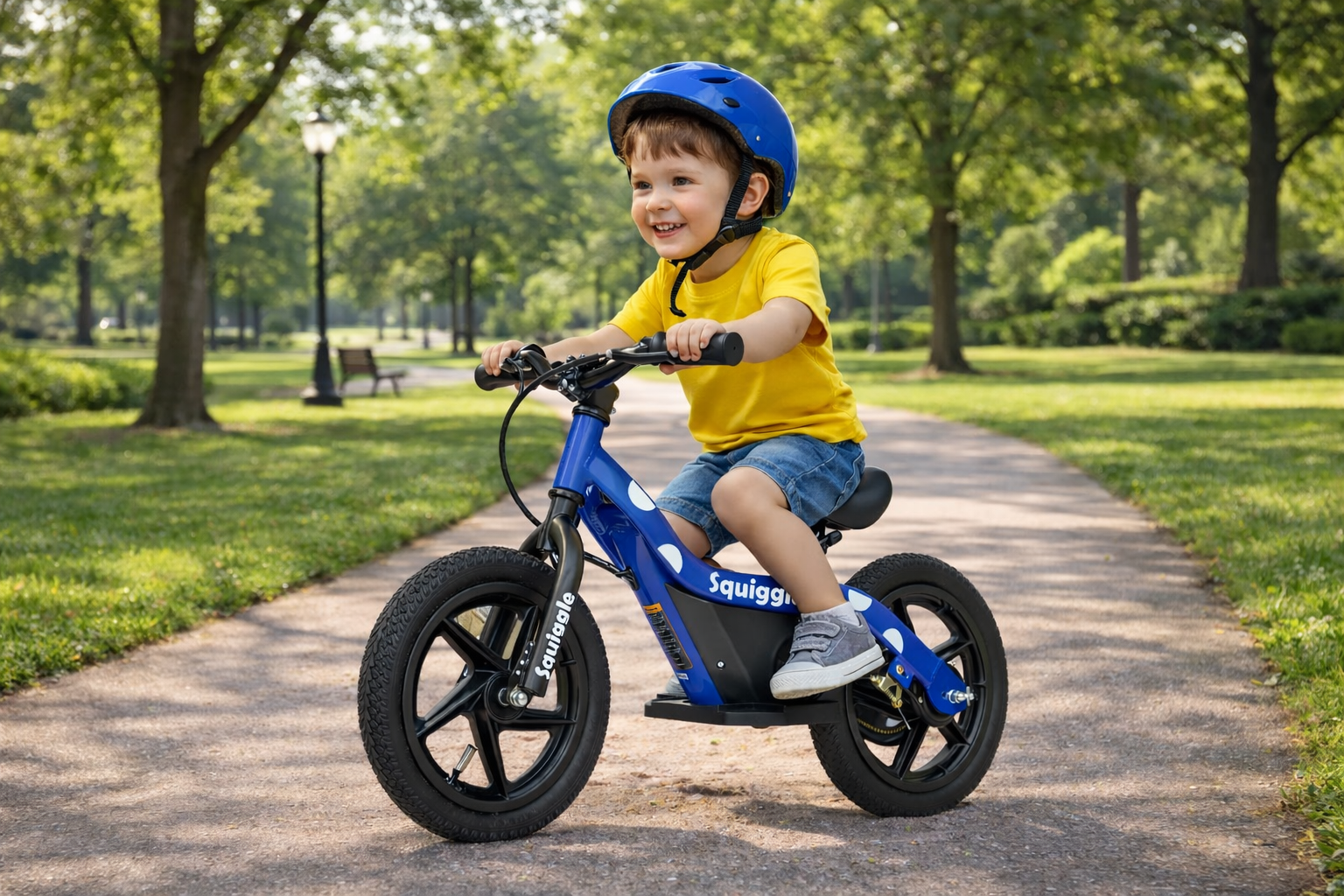
Learning to ride a bike is a big milestone for any child and a proud moment for parents too. Traditionally, this journey started with training wheels. Recently, balance bikes have become the preferred way for children to learn to ride, and for good reason.
Balance bikes help children develop balance, coordination, and confidence faster and more naturally than traditional bikes with training wheels. Here’s why.
What Is a Balance Bike?
A balance bike is a simple bike without pedals or training wheels. Children sit on the saddle and push themselves forward using their feet. As they gain confidence, they gradually lift their feet.
This design focuses on the most important skill in cycling: balance.
Balance Comes Before Pedaling
One of the biggest challenges for children learning to ride a bike isn’t pedaling; it’s balance.
Traditional bikes with training wheels let kids pedal early, but they delay true balance development. Training wheels keep the bike upright, which means children don’t learn how to stabilize themselves.
Balance bikes change this process:
Children learn to balance first.
Pedaling comes later and usually very quickly.
When kids move from a balance bike to a pedal bike, many skip training wheels entirely.
Natural Learning Through Movement
Balance bikes work because they let children learn intuitively.
As kids push off the ground, they:
Adjust their body position naturally.
Learn how to steer and lean.
Develop coordination between hands, feet, and eyes.
There’s no forced posture or mechanical support. Children control the bike from day one.
Faster Progress, Less Frustration
Children on balance bikes typically learn to ride a pedal bike earlier and with less fear than those who start on traditional bikes.
Why?
Their feet stay close to the ground, which builds confidence.
Falls are slower and gentler.
Kids feel in control, not held up by the bike.
This confidence often leads to fewer tears, fewer crashes, and more fun.
Improved Core Strength and Coordination
Because balance bikes don’t depend on stabilizers, children actively engage:
Core muscles.
Leg strength.
Postural control.
These physical skills transfer directly to pedal bikes and even to other sports.
A Smoother Transition to Pedal Bikes
One of the biggest advantages of balance bikes is the transition.
Children who use balance bikes already know how to:
Balance.
Steer.
Brake.
Look ahead instead of down.
When pedals are added, they’re simply learning one new skill, not multiple skills at once.
For many kids, this transition happens in minutes, not weeks.
Better Riding Habits from the Start
Training wheels can unintentionally teach bad habits, such as:
Leaning instead of balancing.
Turning incorrectly.
Over-reliance on support.
Balance bikes encourage proper riding technique from the very beginning, setting children up for safer, more confident riding long-term.
The Bottom Line
Balance bikes help children learn to ride faster because they:
Focus on balance first, which is the hardest skill.
Encourage natural movement and confidence.
Reduce fear and frustration.
Create a smooth transition to pedal bikes.
For parents looking to make learning to ride fun, stress-free, and effective, balance bikes are often the better choice.